

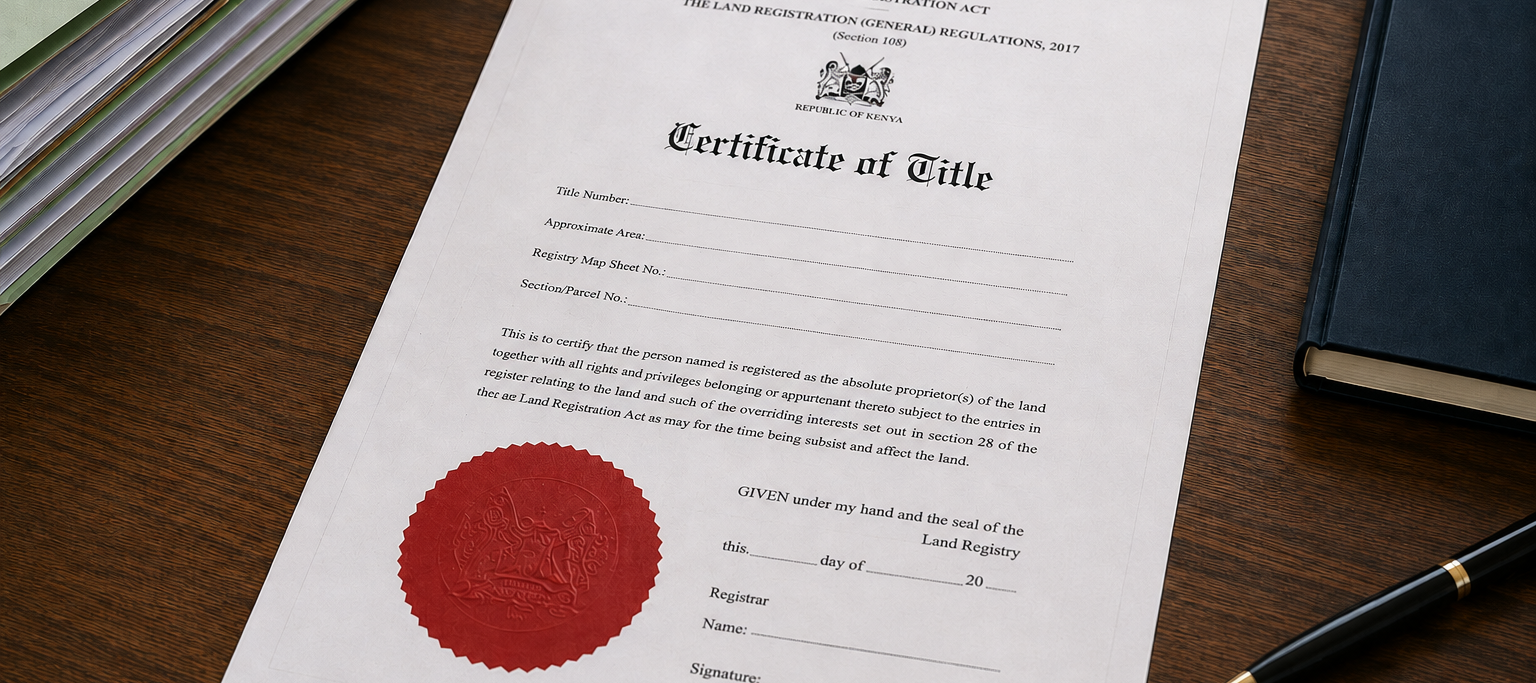
Before you pay a shilling for any plot, there’s one step you should never skip: a land search. It confirms who legally owns the land, and whether it’s free of loans, caveats, or disputes. While digital platforms like Ardhisasa exist, they currently cover only a limited part of the country most of Kenya’s land registries are still manual, meaning you’ll need to visit the Ministry of Lands or your local land registry in person to search a title.
Here’s exactly how a manual land search in Kenya works, step by step.
Why a Land Search Matters
A search tells you three critical things before you commit any money:
- Who the registered owner actually is
- Whether the land has any encumbrances bank charges, caveats, court orders, or disputes
- Whether the title deed the seller showed you matches official government records
If the name on the search certificate doesn’t match the person selling you the land, that’s your biggest red flag. Stop the transaction until it’s resolved.
Where to Go for a Manual Land Search
Most manual searches are processed at:
- Ardhi House (Ministry of Lands and Physical Planning head office) — 1st Ngong Avenue, off Ngong Road, Nairobi, or
- Your local Land Registry / Sub-County Lands Office, if the parcel falls under a different registry
It’s worth calling ahead or asking your lawyer to confirm exactly which office holds records for the parcel you’re interested in : Kenya’s land registries are organized by registration section, not just by county.
What You’ll Need to Bring
- A copy of the title deed (get this directly from the seller : never rely on a verbal description)
- A copy of your national ID (or passport/alien card for non-citizens)
- A completed search application form (RL 26) available at the lands office
- KES 500 for the search fee
Step-by-Step: How the Manual Search Works
Step 1: Get the Exact Title Details
Before you go, confirm the exact land reference number, parcel number, and registry section from the physical title deed not from what the seller tells you verbally. A single wrong digit can return the wrong result entirely.
Step 2: Fill Out Form RL 26
At the land registry, request and complete the official search application form (RL 26). Attach a copy of the title document.
Step 3: Pay the Search Fee
Pay the standard KES 500 search fee at the registry.
Step 4: Submit and Wait
Once submitted, the search typically takes an average of three working days to process, though this can vary depending on the registry’s workload.
Step 5: Collect Your Certificate of Official Search (RL 27)
Once processed, you’ll be issued a stamped Certificate of Official Search (Form RL 27). This document shows the current registered owner, the land’s status, and any encumbrances and it’s the document your lawyer, bank, or SACCO will need for due diligence.
After the Sale: Do a Second Search
Once the transfer is complete and the land is registered in your name, don’t assume it’s automatically reflected go back and do a second search a week or two later to confirm the title has actually moved into your name. This final check protects you from administrative errors or incomplete transfers.
A Few Things to Keep in Mind
- A search result is only as good as the details you submit. Double-check the title number, parcel number, and registry section before you apply.
- A land search certificate isn’t a substitute for a full legal review. It confirms ownership and encumbrances, but pairing it with a conveyancing lawyer, a licensed surveyor, and a physical site visit is still the safest way to buy.
- Some registries are digitizing faster than others. If your parcel happens to fall under a fully digitized registry, you may also be able to search it via eCitizen or Ardhisasa , but for most of the country today, a manual search at the lands office remains the reliable route.
Why This Step Matters So Much
Land fraud and disputed titles are among the most common and costly problems facing first-time buyers in Kenya. A KES 500 search and a few days’ wait is a small price to pay compared to losing your money on land that was never legally the seller’s to sell.
At Premier Realty Limited, we guide every client through this due diligence process before any offer is made so you’re never buying based on a seller’s word alone.
Ready to find your ideal parcel? Browse Premier Realty Limited’s land listings or get in touch with our team for guidance tailored to your budget and location.



Nice post. I was checking constantly this blog and I am impressed! Extremely useful information particularly the last part 🙂 I care for such information much. I was looking for this certain info for a long time. Thank you and best of luck.